A predictive digital biomarker for relapse and dropout risk.
BRISA combines static and dynamic mobile health data to estimate an individual’s risk of relapse and treatment dropout, with the aim of guiding timely clinical support.
Background
Care needs to extend beyond the clinic.
Alcohol use is among the leading causes of preventable disease worldwide. In the Netherlands alone, alcohol-related harm is associated with up to €4.2 billion in annual societal costs. Alcohol Use Disorder (AUD) affects a large and diverse population, yet many people never seek care, often due to stigma, limited access, competing life demands, or a lack of available support.
Even for those in treatment, relapse and dropout remain common challenges, especially during the transition from structured care to everyday life. To improve outcomes, we aim to develop innovations that extend care beyond the clinic: low-burden, accessible, and responsive interventions that can detect escalating risk early and support timely action during and after treatment.
Detect escalating risk early, and support timely action during and after treatment.
Our goal
Earlier, more targeted interventions.
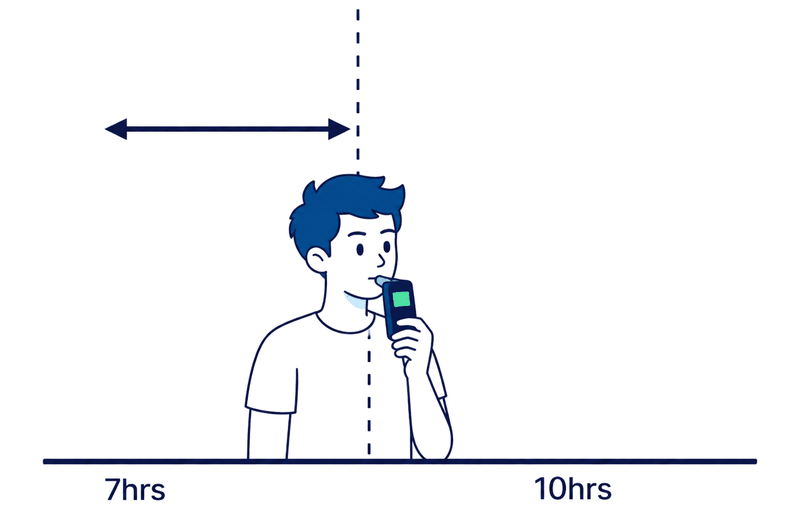
BRISA introduces a predictive digital biomarker that combines breathalyser data with clinical information and questionnaires to estimate an individual’s risk of relapse and treatment dropout. Using machine-learning methods, we analyse patterns in submitted samples, missed tests, and personal clinical context to generate actionable risk signals.
The goal is to give clinicians a clearer, data-informed view of patient status and enable earlier, more targeted interventions, supporting decision-making in a way that is practical and clinically meaningful. Ultimately, we aim to improve the effectiveness and efficiency of remote intervention, making high-quality support more accessible.
Key deliverables
A validated digital biomarker for relapse and dropout risk.
A clinician-facing support tool to interpret and act on risk signals.
Implementation guidance for integrating the approach into real clinical workflows.
By the end of the project, we aim to demonstrate reduced treatment burden, improved adherence, and a personalised, scalable care model that is also economically efficient.
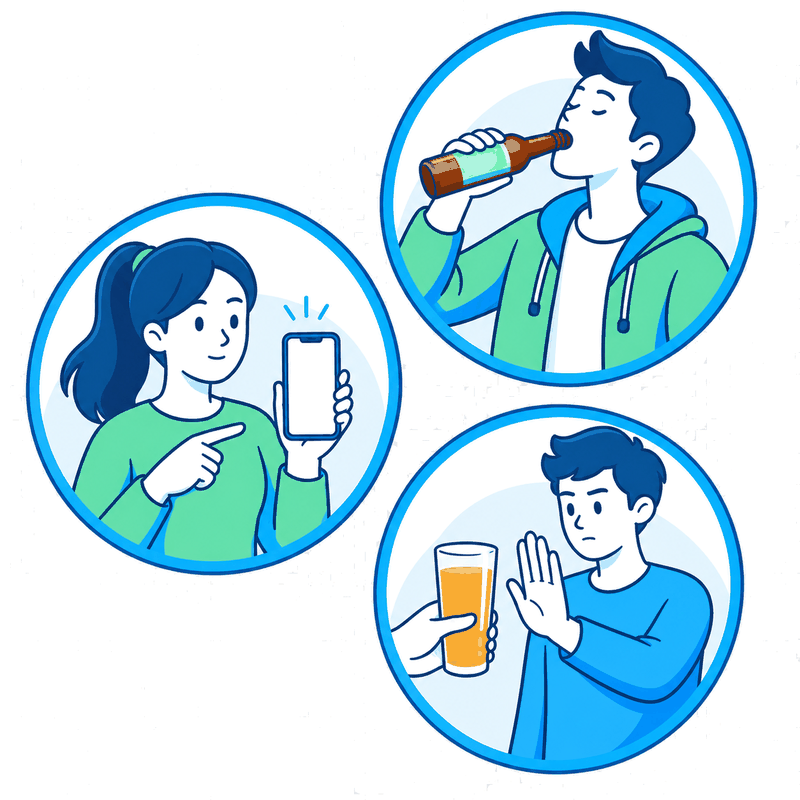
Static traits, slow-moving states and rapid context, read together and reported back.
Project roadmap
Four work packages, one biomarker.
Each work package is one of the four studies on the home page.
From retrospective data to clinical validation.
1
Work package 1 · Retrospective study
Retrospective study
This study uses existing real-world breathalyser data from adults with Alcohol Use Disorder who used a breathalyser as part of their one-year treatment. We assess the quality and completeness of the available data and explore how adherence (“compliance”) impacts what we can learn from remote breath sampling. Using these measurements, we develop and compare initial machine-learning prediction models aimed at identifying risk of drinking events, treatment dropout, and relapse.
2a
Work package 2a · Interview study
Interview study
The interview study focuses on understanding what it takes for a breathalyser-based monitoring system and a relapse-risk digital biomarker to actually work in practice. We conduct interviews with former AUD patients from the retrospective cohort, alongside clinicians, academic experts, and experts by experience. The goal is to identify facilitators and barriers, including usability, burden, acceptability, trust and implementation needs, so that the monitoring approach and risk reporting are designed around real clinical and lived-experience priorities.
2b
Work package 2b · Prospective study
Prospective study
Here we collect new prospective data to address limitations found in WP1 and to test additional features that strengthen prediction and generalization. This includes a randomized comparison (RCT) of breathalyser monitoring versus self-report, and objective validation of alcohol consumption using PEth samples. We study people with hazardous drinking outside of clinical care, and adults with ADHD and hazardous drinking (subclinical), allowing us to evaluate feasibility and performance across different real-world contexts. Insights from WP2-A will inform how monitoring results are communicated and used.
3
Work package 3 · Clinical validation
Clinical validation
WP3 evaluates the approach in a clinical setting via an observational study, focusing on whether the developed digital biomarker can reliably predict drinking events and dropout while remaining practical for patients and clinicians. We assess the effectiveness, feasibility, and burden of implementing breathalyser-based remote monitoring in routine care, including how the system fits into clinical workflows and supports decision-making during AUD treatment.